Croatia is home to 10 UNESCO World Heritage Sites, making it one of Europe’s richest cultural and natural heritage destinations. From the medieval walls of Dubrovnik to the pristine Plitvice Lakes, these sites represent over 2,000 years of history and exceptional natural beauty that attracts millions of visitors annually from the United States and worldwide.
History of World Heritage Sites in Croatia
Croatia’s journey to UNESCO recognition began in 1979 when Dubrovnik’s Old City became the country’s first inscribed site. The Historic City of Trogir and Plitvice Lakes National Park followed in 1979 and 1980 respectively, establishing Croatia as a significant cultural and natural heritage destination in the Mediterranean region.
Since gaining independence in 1991, Croatia has successfully nominated seven additional sites, bringing the total to 10 UNESCO World Heritage Sites as of 2025. This impressive collection includes 8 cultural sites, 1 natural site, and 1 mixed natural-cultural site, representing both Croatia’s rich historical legacy and exceptional biodiversity that appeals strongly to American travelers seeking authentic European experiences.
Cultural UNESCO Sites in Croatia
Croatia’s cultural heritage sites span from Roman times to the medieval period, showcasing the country’s position at the crossroads of Central Europe, the Mediterranean, and the Balkans. These UNESCO World Heritage Sites preserve architectural masterpieces, ancient urban planning, and centuries-old traditions that continue to thrive today.
Old City of Dubrovnik
The Old City of Dubrovnik, inscribed in 1979, stands as Croatia’s most famous UNESCO site and a must-visit destination for American tourists. This perfectly preserved medieval city features massive stone walls stretching 2 kilometers, baroque churches, Renaissance palaces, and Gothic monasteries. The city’s remarkable preservation earned it recognition as the ‘Pearl of the Adriatic’ and serves as a filming location for popular TV series, attracting over 1.3 million visitors annually.
Historical Complex of Split with the Palace of Diocletian
Split’s Palace of Diocletian, built in the 4th century AD, represents one of the world’s most impressive Roman architectural complexes. This living UNESCO site houses approximately 3,000 residents within its ancient walls, blending Roman, Gothic, Renaissance, and Baroque architecture. The palace’s underground chambers, cathedral, and ancient streets offer visitors an unparalleled journey through 1,700 years of continuous habitation, making it a highlight for history enthusiasts from the United States.
Historic City of Trogir
The Historic City of Trogir showcases exceptional medieval architecture concentrated on a small island connected to the mainland by bridges. This remarkably preserved city features a harmonious collection of Romanesque churches, Renaissance and Baroque buildings, and narrow stone streets. Trogir’s Cathedral of St. Lawrence, with its famous portal by Master Radovan, stands as a masterpiece of medieval Croatian art that attracts cultural tourists seeking authentic European heritage experiences.
Religious and Artistic Heritage Sites
Croatia’s religious heritage sites demonstrate the country’s deep spiritual traditions and exceptional artistic achievements spanning multiple centuries. These UNESCO World Heritage Sites preserve unique architectural styles and artistic masterpieces that reflect the cultural diversity of the Adriatic region.
Episcopal Complex of the Euphrasian Basilica in Porec
The Euphrasian Basilica in Poreč represents one of the most important examples of early Byzantine art in the Mediterranean. Built in the 6th century, this episcopal complex features exceptional mosaics that rival those of Ravenna, Italy. The basilica’s golden mosaics, marble columns, and perfectly preserved atrium create an atmosphere of timeless beauty that provides American visitors with insights into early Christian art and architecture in the Adriatic region.
Cathedral of St James in Šibenik
The Cathedral of St James in Šibenik stands as a masterpiece of Renaissance architecture and stone craftsmanship. Built entirely of stone without mortar or wood, this 15th-16th century cathedral features unique construction techniques and 71 portrait heads sculpted on the exterior walls. The cathedral’s innovative dome construction and harmonious proportions demonstrate the exceptional skills of Dalmatian and Italian masters, making it a fascinating destination for architecture enthusiasts visiting from the United States.
Natural UNESCO World Heritage Sites
Croatia’s natural heritage sites preserve exceptional ecosystems and landscapes that showcase the country’s remarkable biodiversity. These UNESCO World Heritage Sites protect pristine environments that serve as living laboratories for scientific research and sustainable tourism development, particularly appealing to American eco-tourists and nature photographers.
Plitvice Lakes National Park
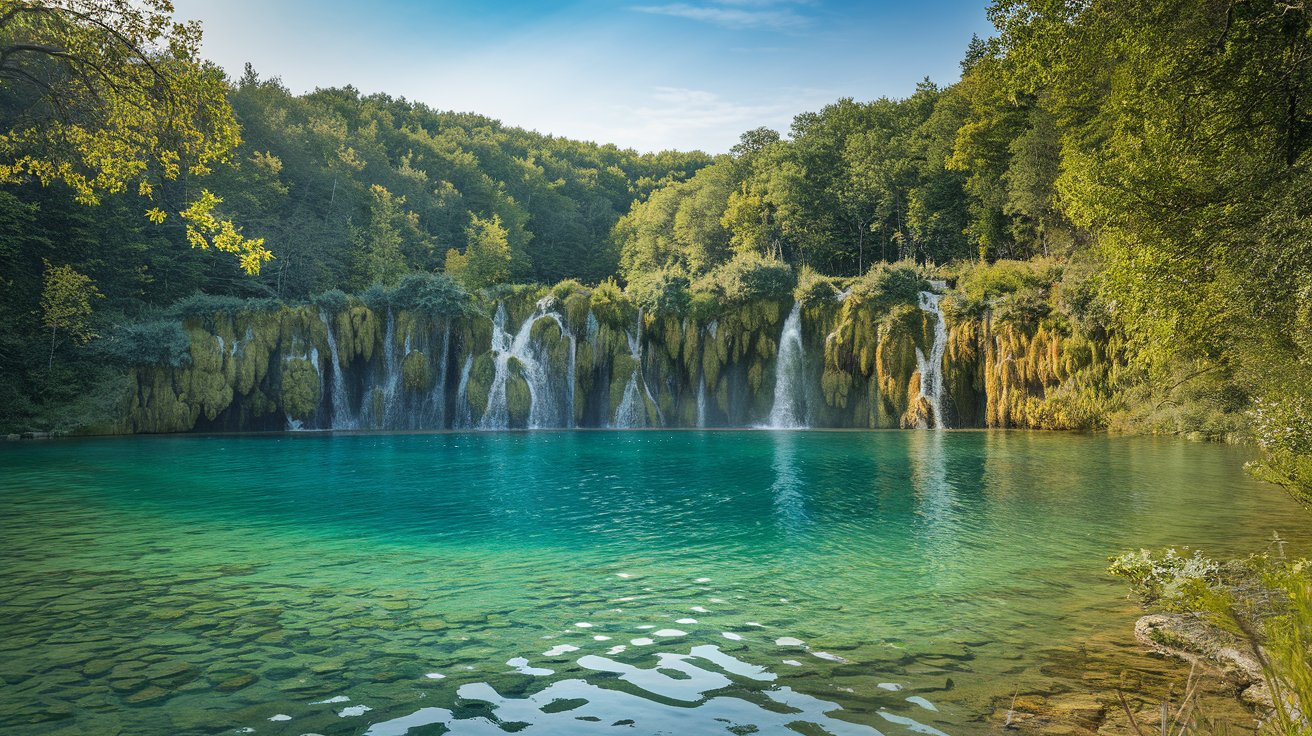
Plitvice Lakes National Park, Croatia’s first and largest national park, features 16 terraced lakes connected by waterfalls and cascades in a pristine forested landscape. This natural wonder, inscribed in 1980, covers 29,685 hectares and hosts over 1,400 plant species, 55 orchid species, and diverse wildlife including bears, wolves, and rare birds. The park’s wooden walkways and electric boats allow visitors to explore this aquatic paradise while preserving its fragile ecosystem, making it Croatia’s most visited natural attraction with over 1.5 million annual visitors.
Ancient and Primeval Beech Forests
Croatia participates in the transnational Ancient and Primeval Beech Forests UNESCO site, which protects old-growth beech forests across Europe. The Croatian components include forest areas in Paklenica and Northern Velebit National Parks, preserving ecosystems that demonstrate the post-glacial expansion of beech forests. These pristine forests provide crucial habitat for endemic species and serve as natural laboratories for climate change research, offering American visitors opportunities to experience Europe’s last remaining primeval forests.
Agricultural and Cultural Landscapes
Croatia’s agricultural heritage sites preserve traditional farming practices and cultural landscapes that have shaped the country’s rural identity for centuries. These UNESCO World Heritage Sites demonstrate sustainable land use practices and maintain living cultural traditions that continue to influence modern Croatian society and attract cultural tourists from around the world.
Stari Grad Plain on Hvar Island
The Stari Grad Plain represents one of the world’s best-preserved ancient agricultural landscapes, maintaining its Greek colonial field system from the 4th century BC. This 1,500-hectare plain on Hvar Island features original stone walls, ancient paths, and traditional dry-stone shelters that demonstrate 24 centuries of continuous viticulture and agriculture. The landscape’s exceptional preservation provides visitors with unique insights into ancient Mediterranean farming practices and produces world-class lavender and wine that appeal to American culinary tourists.
Stecci Medieval Tombstone Graveyards
The Stecci Medieval Tombstone Graveyards represent a transnational UNESCO site shared with Bosnia and Herzegovina, Montenegro, and Serbia. Croatia’s component includes medieval necropolises featuring distinctive monolithic tombstones decorated with symbolic reliefs and inscriptions from the 12th to 16th centuries. These burial grounds reflect the unique medieval culture of the Balkans and provide insights into historical beliefs, artistic traditions, and social structures that shaped the region’s cultural identity.
Defensive Architecture Heritage
Croatia’s defensive heritage sites showcase military architecture and fortification systems that protected the Adriatic region for centuries. These UNESCO World Heritage Sites preserve engineering masterpieces and strategic locations that played crucial roles in Mediterranean history, offering American visitors insights into historical conflicts and architectural innovation.
Venetian Works of Defence
The Venetian Works of Defence between the 16th and 17th centuries includes Croatian fortifications in Zadar and Šibenik as part of a transnational site spanning Italy, Croatia, and Montenegro. These bastioned fortifications represent the evolution of military architecture during the gunpowder era and demonstrate Venice’s strategic control of the Adriatic Sea. The fortifications’ star-shaped designs and advanced engineering solutions showcase Renaissance military innovation and provide visitors with spectacular viewpoints over the Dalmatian coast.
Visiting UNESCO Sites in Croatia: Practical Information
Planning a UNESCO World Heritage Sites tour in Croatia requires careful consideration of seasonal variations, transportation options, and accommodation availability. American travelers typically visit between May and September, when all sites offer full accessibility and extended opening hours. Croatia’s excellent highway system and coastal ferry connections make it possible to visit multiple UNESCO sites within a single trip, with Split and Dubrovnik serving as ideal base cities for exploring the Dalmatian coast.
Entry fees for UNESCO sites in Croatia vary significantly, with natural sites like Plitvice Lakes charging seasonal admission fees (€10-25 for adults in 2025), while many cultural sites in city centers remain freely accessible. However, guided tours, museum entries, and special exhibitions require separate tickets. American visitors should budget approximately €15-30 per site for comprehensive experiences including guided tours and museum visits, with significant savings available through multi-site passes and shoulder season visits.
UNESCO Sites Map and Regional Distribution
Croatia’s UNESCO World Heritage Sites are distributed across four main regions, allowing visitors to plan efficient itineraries based on geographic proximity. The Dalmatian coast concentrates the majority of cultural sites, including Dubrovnik, Split, Trogir, Šibenik, and the Venetian fortifications, making it ideal for combined cultural tours. The Istrian peninsula features Poreč’s Euphrasian Basilica and connects easily with Slovenia’s UNESCO sites for extended Adriatic tours.
Interactive UNESCO sites maps available through Croatia’s national tourism website and mobile applications provide real-time information about opening hours, seasonal accessibility, and current visitor capacity limits. American travelers can download offline maps and GPS coordinates for all UNESCO sites, ensuring reliable navigation even in remote areas like the Ancient Beech Forests or Stari Grad Plain. The official Croatia UNESCO app, updated for 2025, includes augmented reality features and multilingual audio guides specifically designed for international visitors.
Related video about unesco world heritage sites in croatia
This video complements the article information with a practical visual demonstration.
What you should know
How many UNESCO heritage sites are in Croatia?
Croatia has 10 UNESCO World Heritage Sites as of 2025. This includes 8 cultural sites (Dubrovnik, Split, Trogir, Poreč, Šibenik Cathedral, Stari Grad Plain, Stecci tombstones, and Venetian fortifications), 1 natural site (Plitvice Lakes), and 1 mixed site (Ancient Beech Forests). Croatia ranks among the top European countries for UNESCO site density relative to its size.
What is the most famous UNESCO landmark in Croatia?
The Old City of Dubrovnik is Croatia’s most famous UNESCO landmark, attracting over 1.3 million visitors annually. Known as the ‘Pearl of the Adriatic,’ this perfectly preserved medieval city features massive stone walls, baroque architecture, and Gothic monasteries. Its popularity increased significantly due to its role as a filming location for Game of Thrones, making it a top destination for American tourists.
Is Plitvice Lakes a UNESCO World Heritage site?
Yes, Plitvice Lakes National Park has been a UNESCO World Heritage Site since 1980. It was Croatia’s first natural site to receive UNESCO recognition. The park features 16 terraced lakes connected by waterfalls and cascades, covering 29,685 hectares of pristine forested landscape. It represents one of Europe’s most important freshwater ecosystems and attracts over 1.5 million visitors annually.
Which Croatian UNESCO sites can be visited in one trip?
The Dalmatian coast UNESCO sites – Dubrovnik, Split, Trogir, and Šibenik – can easily be visited in a 7-10 day trip using Croatia’s excellent highway system and ferry connections. These sites are located within 350 kilometers of each other along the Adriatic coast. Many American tourists combine these cultural sites with Plitvice Lakes National Park for a comprehensive cultural and natural heritage experience.
Do I need advance reservations for Croatian UNESCO sites?
Advance reservations are required for Plitvice Lakes National Park during peak season (June-September) and recommended for guided tours at cultural sites like Dubrovnik’s city walls and Split’s Diocletian Palace. Online booking through official websites ensures guaranteed entry and often provides discounted rates. Free-access sites like Trogir and Poreč’s basilica don’t require reservations, but guided tours should be booked in advance during summer months.
What’s the best time to visit Croatia’s UNESCO sites?
The best time to visit Croatian UNESCO sites is May-June and September-October when weather is pleasant, crowds are manageable, and all sites are fully accessible. July-August brings peak crowds and highest temperatures but offers extended opening hours and full services. Winter visits (November-March) provide fewer crowds and lower costs but some sites have reduced hours, and Plitvice Lakes may have limited accessibility due to weather conditions.
| UNESCO Site Category | Number of Sites | Key Highlights |
|---|---|---|
| Cultural Sites | 8 Sites | Medieval cities, Roman architecture, Renaissance art |
| Natural Sites | 1 Site | Pristine lakes, waterfalls, diverse ecosystems |
| Mixed Sites | 1 Site | Ancient forests, climate research importance |
| Annual Visitors | 5+ Million | Growing American tourism, cultural significance |